“It’s not that there are no drugs that work. It’s that the drugs can’t get there.” CAST Bio turns the wall cancer builds into a foothold to deliver drugs to intractable solid tumors
UntroD Impact Story | Masa Fujiwara, D.V.M, President & CEO, CAST Bio Inc.
Many cancers today can be brought under control with treatment. Yet some, such as glioblastoma (a type of brain tumor) and pancreatic cancer, still leave patients with very few treatment options.
Dr. Fujiwara, CEO of CAST Bio Inc., explains why: “It’s less that there are no drugs that work, and more that the drugs can’t get there.” Cancer surrounds itself with layers of fibrous material known as the “cancer stroma,” and that stroma becomes a wall that keeps drugs out. CAST Bio is neither breaking down this wall nor going around it. Instead, it aims to use the wall as a “foothold” for delivering drugs.
The person who took on the task of bringing this technology, nearly 20 years in the making, out into the world is an executive who has led a drug discovery venture all the way to an IPO. What does it mean to turn a wall into a foothold? And when, and in what form, will this technology reach patients? We sat down with him for an in-depth conversation.
CAST Bio Inc.
Founded in March 2026. A drug discovery startup established through an incorporation-type company split from RIN Institute Inc., a venture originating from the National Cancer Center Japan. CAST Bio is developing “anti-IF-ADC,” an antibody-drug conjugate (ADC) that combines an antibody recognizing only the “insoluble fibrin” deposited in the cancer stroma with a linker that is cleaved only at that site. Its goal is to overcome intractable solid tumors with few treatment options, such as glioblastoma and pancreatic cancer. President & CEO is Dr. Masa Fujiwara.
Note: An ADC (antibody-drug conjugate) is a drug in which an “antibody” that binds to a marker on cancer cells is connected to a “payload” that acts as the anticancer agent, by a part called a “linker.” It is a mechanism for carrying a drug to a targeted site, and is considered one of the most actively researched fields in cancer treatment today.
Targeting Not the Cancer Cells, but What Surrounds Them
Q: To begin, could you tell us what kind of company CAST Bio is?
Dr. Fujiwara: Let me start with where we came from. There is a company called RIN Institute, which started as a start-up from the National Cancer Center Japan. We carved out assets that are expected to attract more attention going forward and launched CAST Bio in March this year.
What we are going after are intractable cancers. Many cancers have now entered a phase where treatment can keep them manageable. But glioblastoma and pancreatic cancer are different.
For those patients, rather than “attacking the cancer cells,” as has long been taken for granted, we target the cancer stroma that surrounds cancer cells and take out the entire cancer tissue. That is the concept the company was founded on. In the future, we want to realize a world in which the anti-IF-ADC we are now developing (described below) is used for many different cancers.
Not a Lack of Drugs That Work, but Drugs That Can’t Get There
Q: Why are intractable solid tumors so difficult to treat?
Dr. Fujiwara: It’s less that “there are no drugs that work” and more that “the drugs can’t get there.”
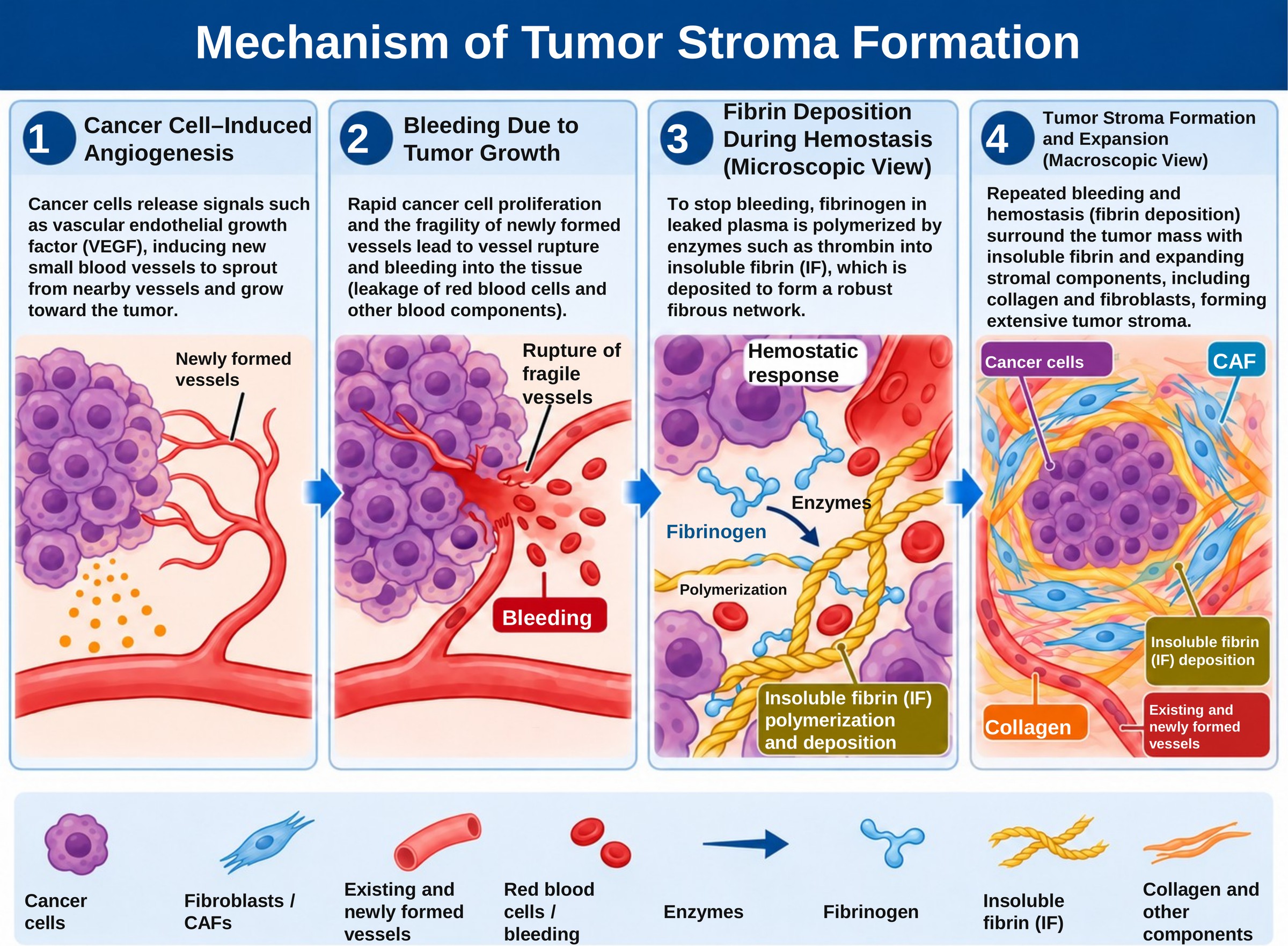
To grow, cancer draws blood vessels in around itself. But as it grows, it ruptures the very vessels it drew in and bleeds. The body tries to stop the bleeding by clotting the blood. The main component of that clot is fibrin. Shortly after the clotting process begins, a process that dissolves the clot also kicks in. What appears at this point is plasmin, an enzyme that dissolves tissue.
As this repeats, layers of fibrous material build up around the cancer cells. This is the “cancer stroma.” Large molecules such as antibodies cannot pass through this wall to reach the cancer cells. What’s more, the more intractable the cancer, not just glioblastoma and pancreatic cancer, the thicker this wall becomes.
Q: Bleeding, clotting, dissolving, and clotting again. So cancer keeps building around itself something like a scab that never heals?
Dr. Fujiwara: Of course, when you are injured, bleeding occurs, clotting kicks in, and fibrin forms. But that is temporary and disappears within a short time. Only cancer tissue has fibrin that persists. So we decided to use fibrin, which persistently exists specifically in the stroma, as a “foothold.”
Note: Fibrin is the protein that makes blood clot. Fibrin that has fully solidified is called “insoluble fibrin.” CAST Bio’s antibody distinguishes and binds only to fibrin in this fully solidified state. It does not react to fibrin before it solidifies or after it has been broken down. Throughout this article, “insoluble fibrin” refers to this fully solidified state.
Q: Beyond the problem of not reaching the target, are there other difficulties specific to solid tumors?
Dr. Fujiwara: There is one more. As cells divide, they mutate into forms different from the original cells. This is called heterogeneity, and because of it, a cancer that should have responded changes along the way. Resistant cells survive, which becomes a major problem. In some cases, the treatment itself can even accelerate mutation.
With blood cancers, you can put an anticancer drug into the bloodstream. Simplified, that is the story. But solid tumors don’t work that way. The drug can’t get there, and the target mutates. These two combined made it an area where people had to give up. Our concept answers both from a different angle.
Note: Of the two difficulties mentioned here, the answer to “the target mutates” lies in aiming not at the cancer cells but at the stroma outside them. Even if the cancer cells themselves mutate, the stroma built up around them does not change, so it remains a stable target. The chapters that follow mainly address the answer to “the drug can’t get there.”
The Envelope Opens Only Once It Reaches Its Address
Q: Rather than breaking down the wall or going around it, you use it as a foothold. What do you do from there?
Dr. Fujiwara: An antibody molecule is, of course, invisibly small, on the order of 150 kilodaltons. The drug being carried, by contrast, is about 700 daltons. By simple calculation, it is only about one two-hundredth the mass.
Note: The dalton is a unit for the mass of molecules. 150 kilodaltons equals 150,000 daltons. This shows that the antibody is orders of magnitude larger than the drug it carries.
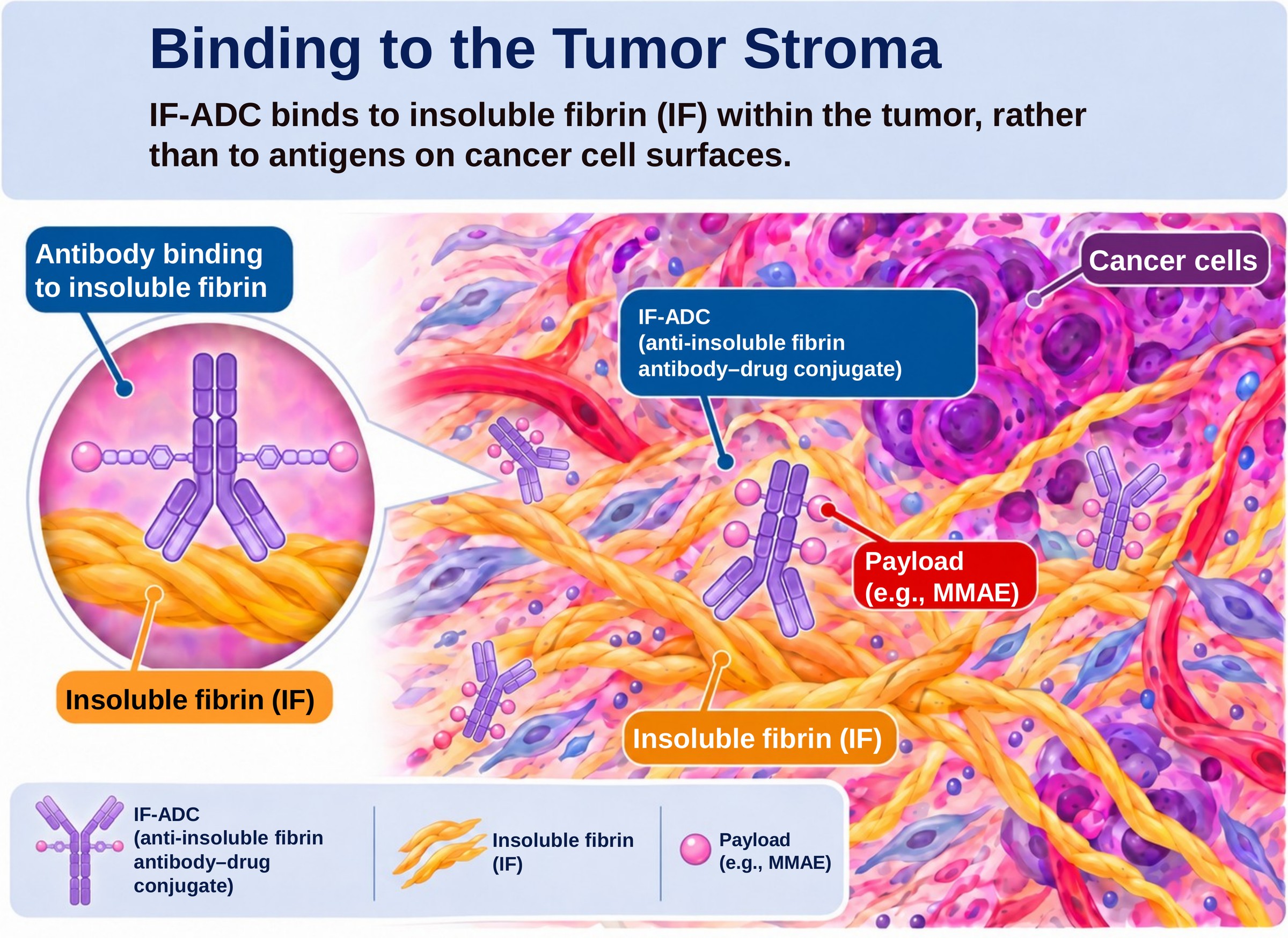
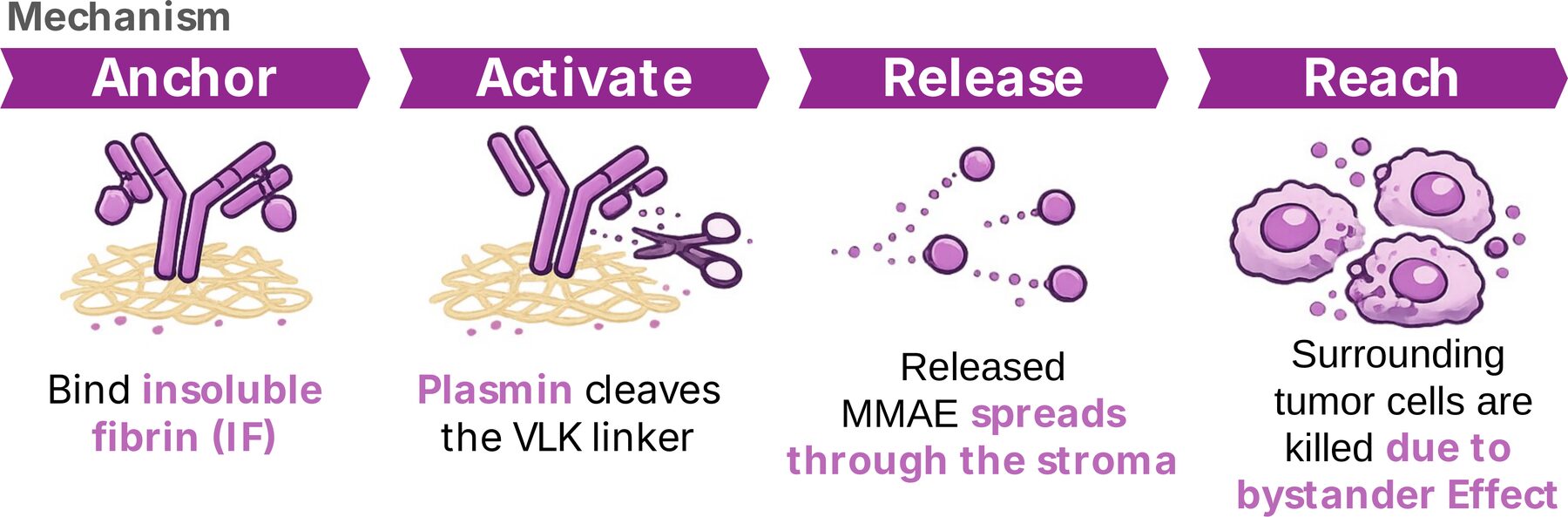
In other words, this drug can permeate the stroma that acts as a wall the antibody cannot pass through. The antibody stays on the outside of the wall and releases only the drug. The released drug spreads throughout the stroma enveloping the cancer. Because the drug is lipophilic (it mixes readily with oils), it enters the cancer cells inside the wall through their cell membranes. Then, when a cancer cell tries to divide, the drug disrupts that machinery and kills the cell. By releasing the drug from outside the wall, we create an environment in which, before they know it, the cells inside have been reached by the drug.
Q: But you are carrying a poison strong enough to kill cancer. If it spilled out on the way, that would be a serious problem. How do you control when it is released?
Dr. Fujiwara: This is where plasmin (the tissue-dissolving enzyme) comes in. We have plasmin cut the part called the linker that connects the antibody and the drug. Plasmin is active only where insoluble fibrin is forming and when cancer cells invade normal tissue in order to grow. That is exactly why the drug is reliably released only in the cancer stroma. I believe the ADC built on this elegant logic holds enormous potential for confronting intractable cancers.
Q: Listening to you, it sounds like a piece of mail. The antibody reads the address, and the linker is the tape sealing the envelope. It won’t come apart until it’s delivered, and it is opened by scissors kept only at the destination. Is that a fair way to understand it?
Fujiwara: Exactly. The envelope opens only once it reaches its address. Only then is its role, the message to be conveyed or the effect to be exerted, delivered to the right recipient. The technical term for this is DDS (drug delivery system), and that is precisely the role of the anti-insoluble fibrin antibody.
Note: Yasuhiro Matsumura, who appears from here on, is the researcher who created the antibody on which this technology is based. He led research for many years at the National Cancer Center Japan and serves as a director of RIN Institute, CAST Bio’s parent company. He is scheduled to become CAST Bio’s Executive Research Advisor from November.
Q: Where did this idea come from?
Dr. Fujiwara: I’m borrowing this from Dr. Matsumura, but even before anticancer antibodies existed in the world, a fundamental concept called the EPR effect had been proposed. Around tumors, blood vessels are fragile, and large molecules leak out from them and also tend to accumulate there. That is what Dr. Matsumura was saying back in the mid 1980s.
Note: The EPR effect is a phenomenon in which large molecules such as antibodies tend to gather around tumors more than in normal tissue. It was published in 1986 by Yasuhiro Matsumura and Hiroshi Maeda (Kumamoto University) and became the starting point for research on delivering drugs to targeted sites (Matsumura Y. & Maeda H., Cancer Research 46:6387-6392, 1986). / It helps to keep in mind that a drug’s journey is divided into two stages. The first stage is “leaving the blood vessels and entering the tumor tissue.” The EPR effect explains this. The second stage is “spreading from there to the cancer cells.” The cancer stroma, which this article calls the “wall,” blocks this second stage.
So antibodies do reach the tumor, but the stroma beyond it always gets in the way. Dr. Matsumura had noticed that as well. In that case, he thought, we only need to think about delivery to cancer cells. Around the cancer stroma, the antibody would keep working as a mail carrier for a long time. Then the next question was: what could reliably open the envelope there? His research found that plasmin is always present at that site. That plasmin recognizes a sequence called VLK and acts as a pair of scissors had been known for a long time. The idea of using that in an ADC (antibody-drug conjugate) is what led to where we are today.
Note: VLK is a sequence of three amino acids: valine, leucine, and lysine. Plasmin finds this sequence and cuts it. This sequence is the “cleavage point” of the linker.
In the early 2000s, he first began obtaining antibodies against insoluble fibrin, and around 2011 he proposed CAST (Cancer Stromal Targeting) therapy. The idea I just described already existed at that point. He combined it with the antibody, and the first patent was filed in 2012.
The Blood-Brain Barrier: Another Wall
Q: I heard it can also reach brain tumors. My understanding is that for many years the conventional wisdom was that antibodies are too large to enter the brain.
Dr. Fujiwara: In terms of delivering drugs, the brain is a far more difficult place than other organs. There is the blood-brain barrier, and even small molecules have a hard time getting in. The brain’s blood vessels build a strict gate between themselves and the outside, letting only permitted substances in and out.
And yet, it gets past even that. Dr. Matsumura was saying this back in the 1980s. The blood-brain barrier is the mechanism that protects what matters most to the body, which makes it all the more surprising to people. People who understand biology always ask me, “Surely it can’t be that easy here. Surely this barrier can’t be crossed that easily.”
But antibodies leave the blood vessels because the vessels become leaky when there is inflammation or when cancer induces this. And the fact that some antibody drugs already cross the blood-brain barrier has since proven exactly what Dr. Matsumura proposed some 40 years ago.
Note: In brain tumors, it is thought that as the tumor grows, the blood-brain barrier partially breaks down, and the EPR effect described above allows large molecules to enter. In other words, when facing the stroma, the EPR effect appears as a limit, “it cannot go any further,” while in the brain it works the other way, as “the power to cross the barrier and get in.”
Q: What happens after it crosses the barrier?
Dr. Fujiwara: Regarding our ADC, it doesn’t simply leak out. As a DDS, the antibody not only exits the blood vessels but also binds to insoluble fibrin, a component of the stroma standing between the blood vessels and the cancer cells, and builds a foothold there. Doing so makes the cleavage of the VLK linker by plasmin more efficient. That way, the drug is delivered around the cancer more safely and more reliably. That is the idea.
“How Did They Ever Obtain Something Like This?” An Antibody 20 Years in the Making
Q: Are there other companies pursuing the same mechanism?
Dr. Fujiwara: Apart from us, I’m not aware of any company doing an ADC with insoluble fibrin. In fact, many researchers want to use this antibody, and we provide it for research purposes only. It is that much of a “how did Dr. Matsumura ever obtain something like this?” kind of antibody.
Note: “Obtaining” an antibody is how researchers describe finding and producing an antibody that binds only to its intended target.
When fibrin gathers and solidifies, its structure changes. Dr. Matsumura obtained an antibody that recognizes only that changed part. I think that is miraculous and groundbreaking. Dr. Matsumura himself says he was surprised when he obtained an antibody that recognizes only the structural change (insolubilized), even though the protein itself is exactly the same.
Note: For this combination of antibody and drug, superior antitumor activity has been confirmed in an animal model implanted with human glioblastoma tissue, compared with MMAE (the drug alone, not attached to the antibody) as a control. In addition, deposition of the target insoluble fibrin has been confirmed in all 20 glioblastoma specimens examined.
Q: It is also a path no one has taken before. Do you see risks in that?
Dr. Fujiwara: The process by which insoluble fibrin forms is itself an ordinary reaction for living organisms, not just humans. As far as I have heard, it is the same in all organisms from fish upward. The epitope, the very small part that the antibody actually contacts, is the part that undergoes a structural change when fibrin polymerizes, and our antibody recognizes it regardless of animal species.
So the antibody we use is the same in animal studies and in humans. That makes evaluation easier. We have actually run experiments on whether it is safe in the presence of intentionally formed fibrin, and we have data showing it does no harm in an artificially created thrombosis model. Safety evaluation is that much easier. That is actually another advantage.
“If We Could Extend That by Even One Year”
Q: Glioblastoma and pancreatic cancer. Why have you named these two first?
Dr. Fujiwara: The reason is simple. These are diseases with a “five-year survival rate of 10 percent or less,” considered the most difficult to treat.
If we could extend that by even one year, I think that would be tremendous. Going beyond that to a complete cure will be a challenge for the future, but I believe that, logically, there is a real possibility of getting there.
Q: Why is it so difficult to detect these two early?
Dr. Fujiwara: Brain tumors and pancreatic cancer rarely show symptoms. By the time they are noticed, complete surgical removal has become difficult. With pancreatic cancer, there are almost no subjective symptoms such as pain, so by the time it is found, it is often too late to do anything.
Q: I understand the stroma becomes thicker as malignancy increases.
Dr. Fujiwara: The stroma is most developed in highly malignant cancers, where conventional treatment had no choice but to give up. Our strategy turns that on its head. We aim to conquer intractable cancers that could not be treated before by using their thick stroma as a foothold.
Q: Will this extend to cancers beyond these two?
Dr. Fujiwara: In other cancers, too, the stroma develops as the disease progresses. Even for cancers such as scirrhous gastric cancer, colorectal cancer, lung cancer, and breast cancer, where several lines of treatment are established, once the last line of treatment has been exhausted, there are no options left. If this can shine a light there, if we can prove it, I believe it could bring enormous hope to patients.
“I Don’t Have the Ability to Create Something New”
Q: Now we would like to ask about you. You have experienced everything from drug discovery to commercialization. Please start by telling us about your career.
Dr. Fujiwara: I started as a researcher at Chugai Pharmaceutical. Looking back, I was very lucky: I was able to work on erythropoietin, a protein drug that increases red blood cells. People who had become so anemic that they could no longer climb stairs were walking normally within a week. At the time, it was seen as an area where “it’s not something you die from right away,” but having such a groundbreaking experience there was the start of my career.
After nearly 14 years there, just before turning 40, I moved into consulting, and then gained experience managing an organization at a contract research organization (CRO) for drug development. That was when I met Mr. Koichi Ashida, who at the time was working hard to set up a fund at FTI (Fast Track Initiative). I came across ADLib System, an antibody generation technology originating from RIKEN, and in 2005 I founded Chiome Bioscience with Mr. Ashida. That was the start of my life in bio-start-ups. Fortunately, we listed on what was then the Mothers market in six years and ten months. Getting to the IPO was hard, but I learned firsthand that things are far harder after the IPO.
After leaving Chiome after a full 12 years, I thought that if I took on something next, it should involve AI and the central nervous system, the brain. What came my way then was Dr. Masashi Yanagisawa’s sleep measurement business: diagnosing sleep disorders using brain waves and AI analysis. It brought those two keywords together, so in October 2017 I co-founded S’UIMIN with Dr. Yanagisawa. At S’UIMIN, once I led and had completed fundraising and obtained medical device certification, I felt I had fulfilled my role, and I stepped down in February 2023.
Q: And then on to RIN Institute.
Dr. Fujiwara: Right around then, I heard that RIN Institute was looking for a president. I knew firsthand how tough drug discovery start-ups are, so I thought about it a great deal. Still, there were people who needed me. And I felt that the concept of attacking the stroma was truly unique and might have the potential to change the world. Those two things made up my mind. I joined RIN Institute in April 2023 and became its President the following year.
Q: You took on a technology that Dr. Matsumura spent nearly 20 years building, even though you are not the inventor. Since researchers often found companies themselves, this seems a somewhat unusual arrangement. How do you see it?
Dr. Fujiwara: In that sense, it was the same with Chiome. When I learned the principle behind ADLib System, created by Dr. Kunihiro Ohta, I could envision that “this might make it possible to produce custom-made antibodies in two weeks.” That is why I did it.
I don’t have the ability to create new technologies or new things myself. But when it comes to bringing them out into the world, I might be able to make some contribution. That was my starting point at Chiome, and it is the same this time.
At the same time, there was Dr. Matsumura’s passion. It was wonderful that he was someone I wanted to work with. He obtained the insoluble fibrin antibody in the early 2000s and spent a full 20 years bringing it to fruition. I sensed his tenacity, in the best sense of the word, and his truly strong conviction from the very beginning. Having been with him for three years, my feeling that “he really has created something wonderful” has only grown stronger.
The Toxicity That Should Have Appeared Barely Did
Q: Let us ask about where things stand now. Most recently, you have been conducting preliminary toxicity studies in rats and monkeys.
Dr. Fujiwara: What encouraged us most was the good data from the preliminary monkey study.
Drugs of this type cause bone marrow suppression; by their nature, they inevitably show toxicity where cell division is active, and qualitatively that was the case. But this time, even when we raised the dose to a level at which sufficient efficacy can be expected, only relatively mild bone marrow suppression appeared. And another thing: only the toxicity we expected appeared.
It would not have been surprising if the animals receiving the drug had become unwell or lost hair. Instead, their appetite did not drop, and any anemia was mild, really just short of anemia, with red blood cells falling by only about 10 percent. I think it was a very good result.
Q: The side effects of anticancer drugs shape patients’ daily lives. Even though this was an animal study, is it significant that they were mild?
Dr. Fujiwara: Of course, true safety and efficacy cannot be judged until they are verified in humans. But I am partly relieved that we obtained the results we expected in monkeys, which are close to humans, and I hope we can move on to full-scale preclinical studies.
Q: What did this study confirm?
Dr. Fujiwara: The monkeys in this study were normal animals; they were neither injured and forming blood clots nor carrying cancer. At low doses, we saw no effects at all. As the dose increases, the drug gets taken up by things like macrophages that dispose of foreign substances, and the drug is separated and released. We had predicted that some of this would show up as side effects. But we had to go to a higher dose than we expected before we saw even signs of it. That is significant.
In test tube and animal experiments, we had confirmed that it is very stable in plasma and serum. These results are in line with that expectation.
One Drug, a Reusable Linker, and Ten Years from Now
Q: Let us also ask about how the business is structured. You have one development candidate, anti-IF-ADC, and the linker technology. How are the two related?
Dr. Fujiwara: We will put our limited resources into developing anti-IF-ADC. But the linker is not just for this technology. It also works when attached to existing antibodies that directly target cancer cells.
We have licensed it to Mycenax Biotech, a CDMO (a company that undertakes contract development and manufacturing of pharmaceuticals), for use in its CDMO business only. It is a Taiwanese company we have worked with for more than ten years, and it provides very high-quality ADCs. Even without us taking any particular action right now, we earn income when they win contracts, and the possibility of future partnerships with pharmaceutical companies also comes into view.
Q: What are the most important challenges in running the company as a startup?
Dr. Fujiwara: More than anything, it is securing people who can run with us at full strength all the way to an exit through M&A. Because we are small, I had always kept in mind that we must be careful in bringing in the right people. Initially, I was thinking of hiring young people to whom we could entrust the future, with a target of around February 2027, but Ikiru Matsumoto and Takashi Asahi joined us in September and October, respectively. I got to know Mr. Matsumoto through business development activities overseas last year. He has experience leading clinical trials in brain tumors for two ADCs at a major pharmaceutical company, and I had secretly thought, “I’d love to work with someone like him.” Then, in April this year, he sent me a message on LINE saying that, for reasons on his former employer’s side, he would be leaving at the end of June, and asked me for advice on his next career move. I immediately set up a dinner and asked him on the spot to join us. Dr. Asahi has an extremely rare career, having worked on both the research and development of ADCs for about 18 years at Daiichi Sankyo, and it was Mr. Matsuzawa of UntroD’s value-up team who guided him to join us. Dr. Asahi knows ADCs inside and out from working in an environment at the very forefront of the ADC world, yet he fell in love with the novelty of CAST therapy and quickly decided to join. As COO of the business strategy division and CSO of the research strategy division, respectively, they will clear the hurdles ahead together with me. Both of them, in addition to their experience and potential, are people everyone loves. It may sound like self-praise, but I am filled with amazement and gratitude for my own good fortune in meeting such ideal talent at just the right time, and to Mr. Matsuzawa for making it happen.
Q: We understand that drug discovery takes a long time. With that in mind, what timeline do you foresee for reaching patients?
Dr. Fujiwara: Our aim is an M&A by a major pharmaceutical company in five years. About five more years will probably be needed after that, so I hope it will reach the world, and reach people, about ten years from now. If it is truly novel and groundbreaking, it might get onto a faster track, but ten years is our guideline.
After the M&A, we will leave it to the pharmaceutical company we pass the baton to. But we will build a situation in which that company says, “With results and information like this, leave the rest to us.” Getting that far is CAST Bio’s mission.
Q: Ten years is not a short time for people facing treatment right now. And yet you press on. How much do you yourself believe in this drug?
Dr. Fujiwara: It is the last thing I would want, but if I myself were ever to develop one of these cancers, I would raise my hand and take part in the clinical trial.
UntroD’s Comment
Shining a Light Where No Light Has Fallen
There are three reasons we decided to invest. The first is the innovativeness of the technology. The idea of targeting insoluble fibrin is not simply a new target. The formation of insoluble fibrin and the generation of plasmin play an essential role in the very process by which cancer becomes intractable. The approach stands on very solid science that focuses on this biological mechanism.
Most of the ADCs approved today target markers on the surface of cancer cells. But because those markers are also present to some degree on normal cells, side effects occur easily, and because the same tumor contains cells without the marker, some patients do not respond. More than a dozen ADCs have already been approved by the FDA, and even more are in development. Against that backdrop, the choice to target “insoluble fibrin in the cancer stroma,” which is common to almost all intractable solid tumors, has the potential to overcome both of these limitations at once. What’s more, it can be developed across cancer types for intractable cancers with limited treatment options. I do not see this as just one ADC among many. I see it as a technology that could change the paradigm of cancer treatment, with large potential as a business.
The second is its social significance. Beyond its efficacy, the fact that safety can be expected is significant. It has the potential not simply to extend life, but to do so without lowering the quality of life. That is where we see great significance.
The third is the people. This is technology from a top-tier researcher, Dr. Matsumura, and Dr. Fujiwara is a serial entrepreneur who has taken a company public. On top of that, outstanding physicians and researchers at the National Cancer Center Japan are contributing their knowledge.
This investment is “untrod” in the UntroD sense in two ways. One is delivering drugs where there are still no drugs: intractable solid tumors. The other is that if a company is one everyone wants to invest in, there is no need for us to invest; this is a case that we invest in precisely because we are who we are. There are countless cancer assets, and it is hard for most people to understand what each one is claiming and how they differ. This asset gets buried among them, and no light falls on it. Shining a light on it, helping people understand its value, and bringing many investors on board. In that sense, too, I think it is a very UntroD theme.
(Tatsuhiko Fujimoto, Growth Manager, UntroD Capital Japan / Outside Director, CAST Bio Inc.)
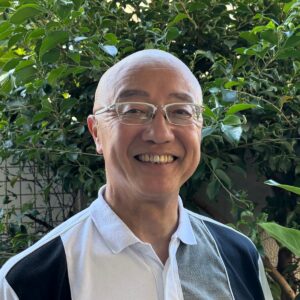
Masa Fujiwara, D.V.M
CEO, CAST Bio Inc.
Interviewer | Shinya Narita
PR/Branding, UntroD Capital Japan